Leadership
Reps
Reps
🔥
0
Let's go
Answer all 8 questions
Reflect
Week 22
This Week's Scores
—
Mon
—
Tue
—
Wed
—
Thu
—
Fri
—
Sat
—
Sun
Learning Library
Curriculum · Books · Videos
One video per week. One question to sit with. Watch, log what landed, bring it to your next session.
Impact Players
▾
Buy on Amazon →
Some people do their job. Impact Players do their job plus handle the messy, undefined work others avoid.
They ask "What's needed most right now?" not "What's my job?" — moving toward ambiguity rather than waiting for direction.
The key shift: from contributor to multiplier. Impact Players make the people around them better, not just themselves.
Start Here
Impact Players | On Leadership
What separates good from disproportionate impact.
Then Watch
Defining and Finding Impact Players
How organisations identify and develop impact players.
My Notes
Multipliers
▾
Buy on Amazon →

Leaders either multiply or diminish the intelligence of people around them — often without realising it.
Multipliers ask questions that stretch people. Diminishers give answers that create dependency.
The Accidental Diminisher: well-intentioned leaders who suppress performance through over-helping, rescuing, or dominating the room.
Essential
The Accidental Diminisher
When intention and impact are different.
Long Form
Leadership Wisdom Interview
How leaders accidentally suppress capability.
TEDx
Living with Child-Like Wonder
The curiosity mindset behind Multipliers.
My Notes
The Ideal Team Player
▾
Buy on Amazon →

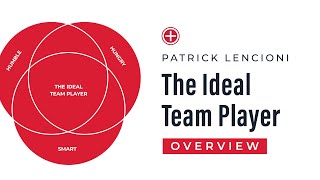
Three virtues define great team players: Humble (no ego), Hungry (self-motivated), Smart (emotionally intelligent with people).
Missing any one creates predictable team problems — the bully, the slacker, the charmer who never delivers.
Humble is the foundation. Without it, hunger becomes ambition and smartness becomes manipulation.
Mandatory
Are You an Ideal Team Player?
Humble. Hungry. Smart.
Overview
The Ideal Team Player Overview
Shorter, more modern explanation.
Keynote
Silicon Slopes Keynote
One of the better public conference talks.
My Notes
The Culture Code
▾
Buy on Amazon →

Great cultures are built on three skills: building safety, sharing vulnerability, and establishing purpose.
Belonging cues — small, repeated signals — tell people they are safe and valued here. Leaders send them constantly, often without knowing it.
Vulnerability loops: when a leader goes first (admitting uncertainty, asking for help), it creates permission for others to do the same — and trust follows.
Start Here
Building a Culture of Trust
Safety, vulnerability, belonging cues.
Long Form
Daniel Coyle on The Culture Code
Mechanics of how great cultures work.
My Notes
Friend & Foe
▾
Buy on Amazon →


Every relationship contains both cooperation and competition. The best leaders navigate both simultaneously — not choosing one or the other.
Perspective-taking is the single most powerful leadership tool: understanding what others want before trying to influence them.
Power expands options but narrows empathy. Great leaders actively fight this — staying curious about the people around them as they gain authority.
Start Here
Lead and Inspire
Perspective, status, power, influence, inspiring action.
Podcast
Think Fast Talk Smart (Stanford)
Communication and influence in practice.
My Notes
Bonus: Best of Leadership
Not on the reading list — but essential viewing
TED
The Power of Vulnerability
Brené Brown. One of the most-watched TED talks ever.
TEDx
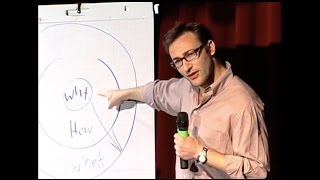
Start With Why
Simon Sinek. Why purpose drives everything.

Talk
How to Know a Person
David Brooks on truly seeing other people.
Talk
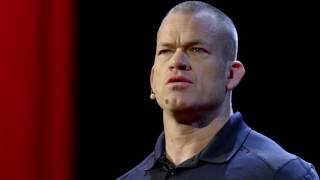
Extreme Ownership
Jocko Willink. No excuses. Total accountability.
Keynote
Chasing Excellence
Ben Bergeron on elite performance and coaching standards.
Coach
Leadership Pathway
Hero Leader
→
Multiplier Leader
Strengths
Development Areas